Inside The Overlook: A Collaborative Waterfront Home in GreenwichFinding Fun in Functionality
 Noubi Says by NOUBIKKO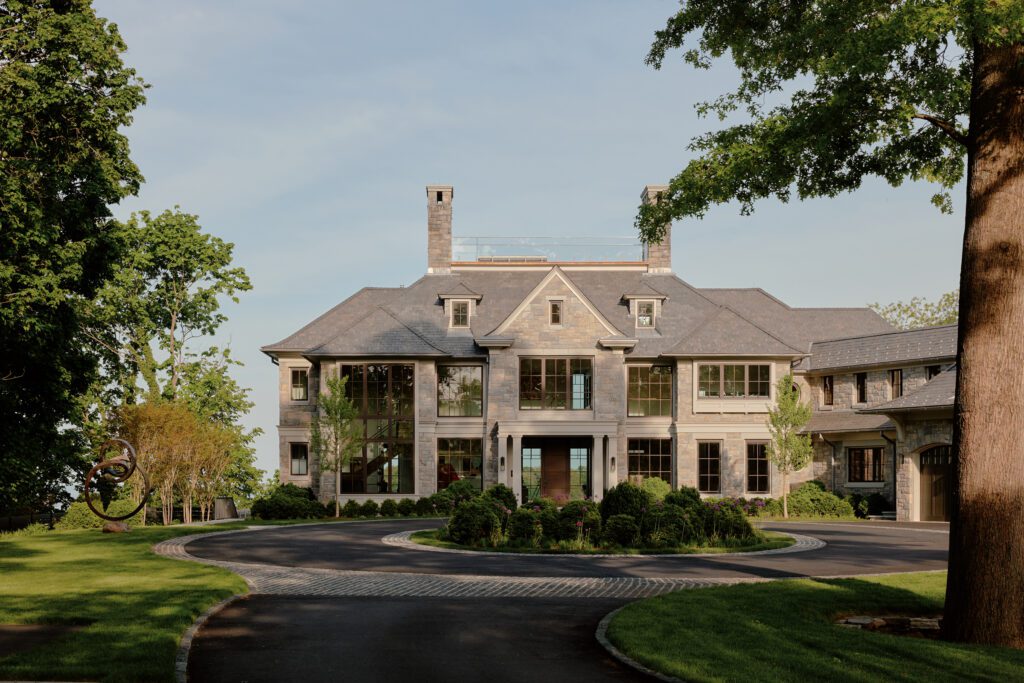
Cardello Architects knows how to satisfy its clients: Get them involved with design from the get-go—and make sure they enjoy the process. “We’re a firm that can speak any language, but we prefer for the client to dictate that language,” says Robert Cardello, who founded his firm 26 years ago. “Then we’re inspired by what’s available on their property, and what the client’s wishing for.” If architects can keep their clients engaged and invested, he reasons, they’re going to like the process.
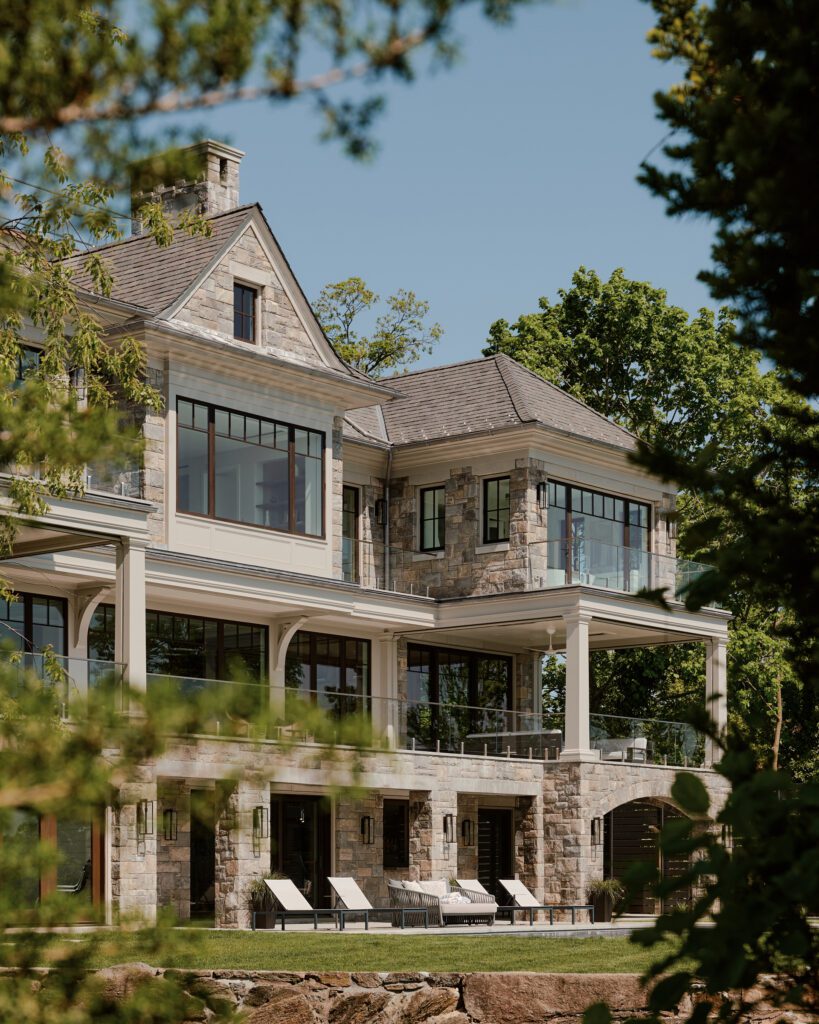
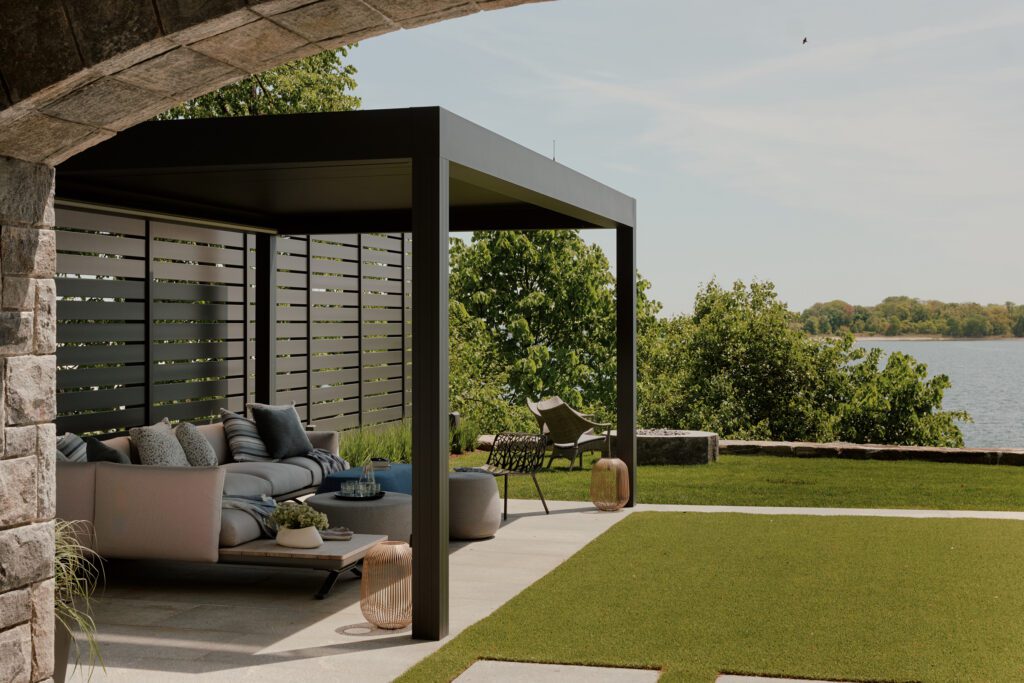
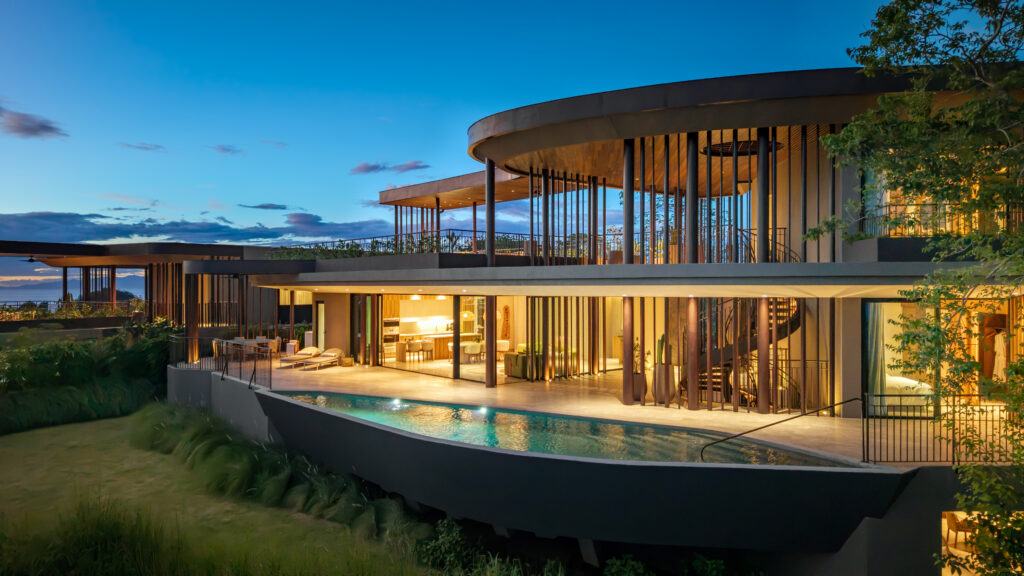
Case in point: A new home called The Overlook in Greenwich Harbor overlooking Long Island Sound on the border of Connecticut and New York. It’s sited on a little less than two acres and overlooks historic Shell Island Tower and Calf Island Wildlife Refuge. Cardello’s clients—a couple with college-age children—acquired the property about 10 years ago, conducting their due diligence before contacting the architects.
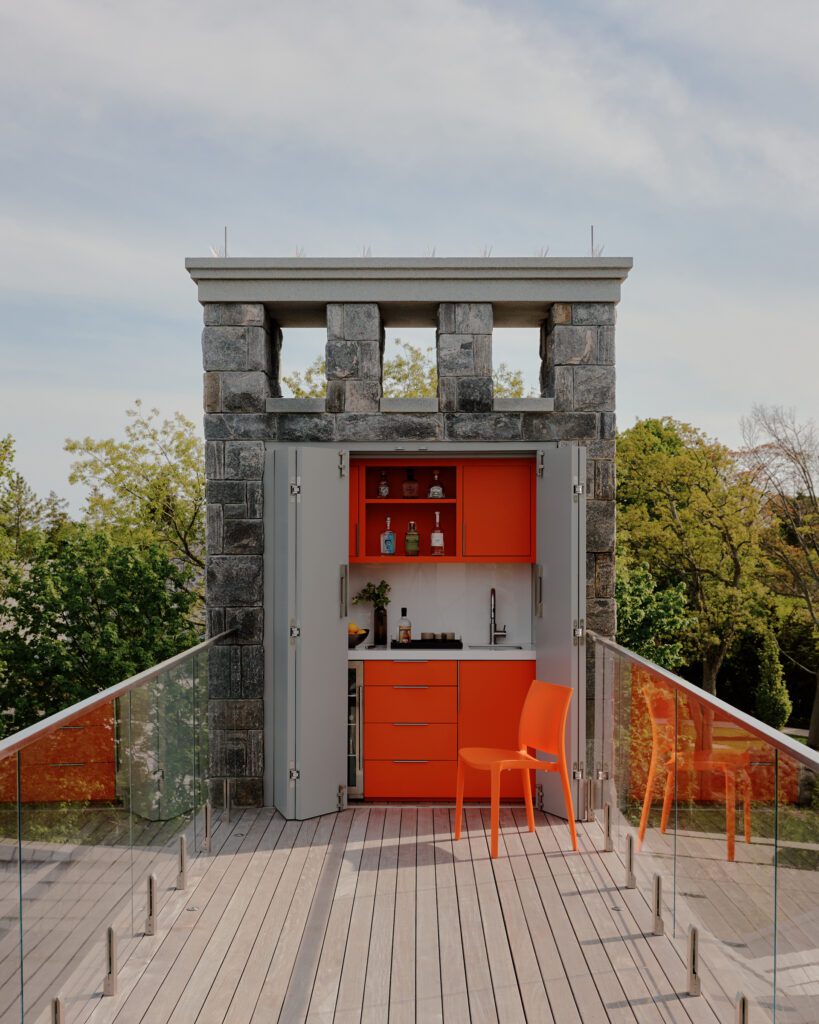
Cardello and his partner, David LaPierre, met them and discussed not just the project, but the kind of clients their firm takes on. “They’re not thought of as a burden, and they want to have some fun with the project,” LaPierre says. “This couple wanted to be engaged, be at every meeting—and have a great time doing it.”
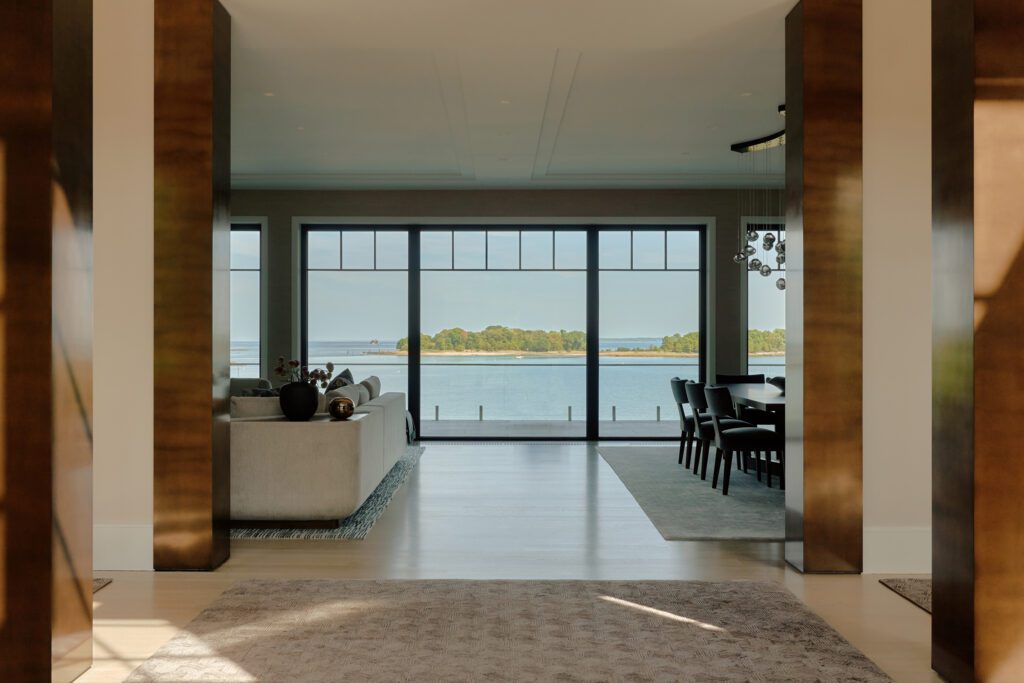
Their dream: To build a legacy home base for themselves, their children, and their grandchildren. They placed a high priority on the sweeping views of Long Island Sound and islands in the distance, both from inside and different elevations outside. For landscape architects Wesley Stout and Cory Jorgensen, those exterior vistas were keys to the site’s master plan. “The challenge was that it’s narrow and tapers toward the water, and there was a lot of back and forth about where to place the house and the elements and make them fit,” Jorgensen says.
They crafted the entire exterior environment from street to water. The northern promenade now delivers the client first from the driveway down to the swimming pool, and then to the waterfront views. “It’s a procession to get them from one space to the next,” says Stout, founder of the firm that bears his name. A rocky shoreline, characteristic of the location, rises in elevation from the sound.
Above that is a platform that’s the homeowners’ association property, then a retaining wall, and then The Overlook. “It’s directly on the waterfront even though technically it’s not,” says Cardello. “They get the benefit of the vista without paying taxes on the waterfront.”

Inside, there’s the basement, then a firstfloor gallery/living/dining space, then secondfloor bedrooms, third-floor recreational spaces, and the rooftop level above. “We identified what volumes, scale, and proportion would not be overwhelmed with large pieces of furniture,” he says.
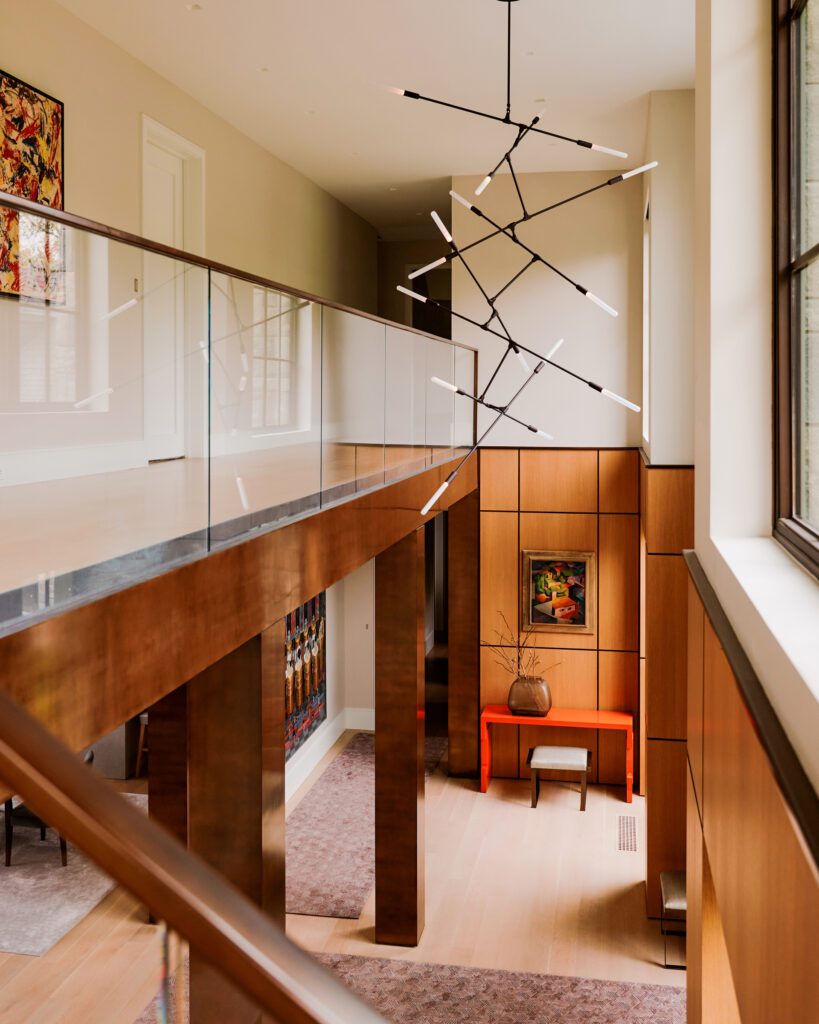
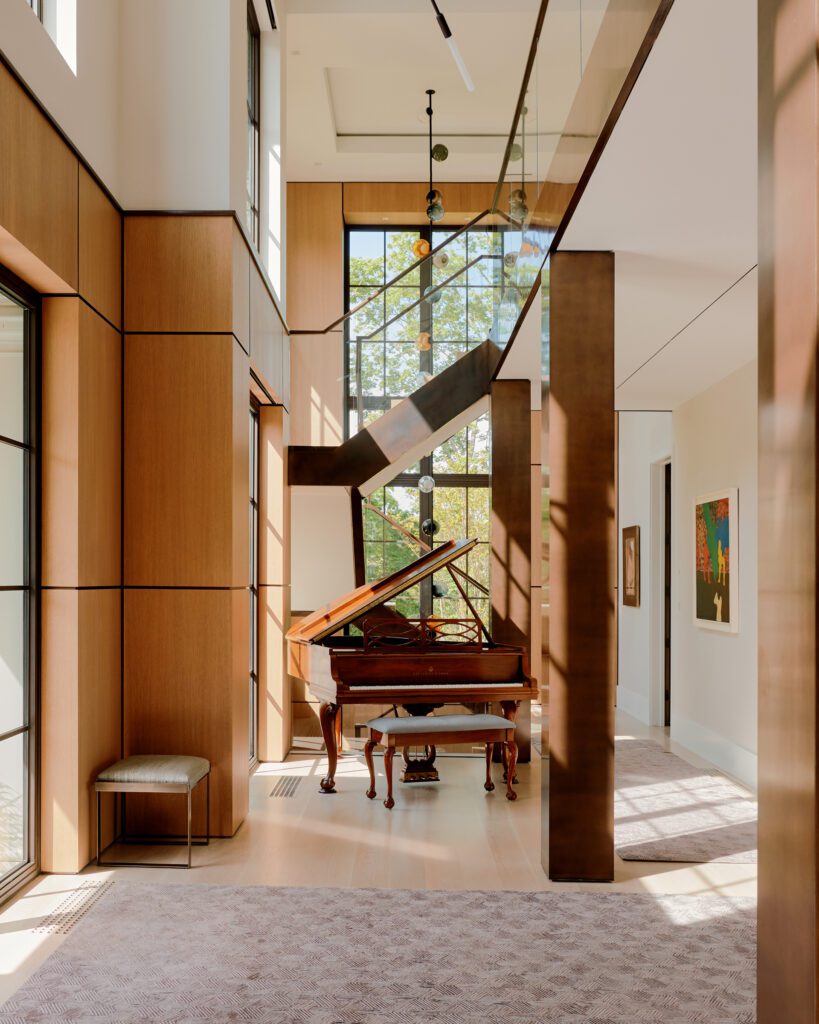
And there’s drama upon entrance at the front door. “It’s a double-height space, and the stair climbs up the north side of the house,” he says. “By removing the stair from the center, you’ve freed up for more space, but then there’s this sculptural object.”
The house faces southeast, all of it with a sound-front view. “It’s 160 feet and then turns 300 feet back toward the west,” LaPierre says. “It’s a cleaver shape—it looks like a nice T-bone or Tomahawk steak.” The site influenced nearly every design decision for Taylor Lagerloef, founder and principal designer at New York–based Studio Lagerloef.
She’s an interior designer who takes her cues from what surrounds her, like this home’s relationship to the water. “The overarching desire that we wanted was a home that feels nautical in spirit but doesn’t fall into cliches,” she says.
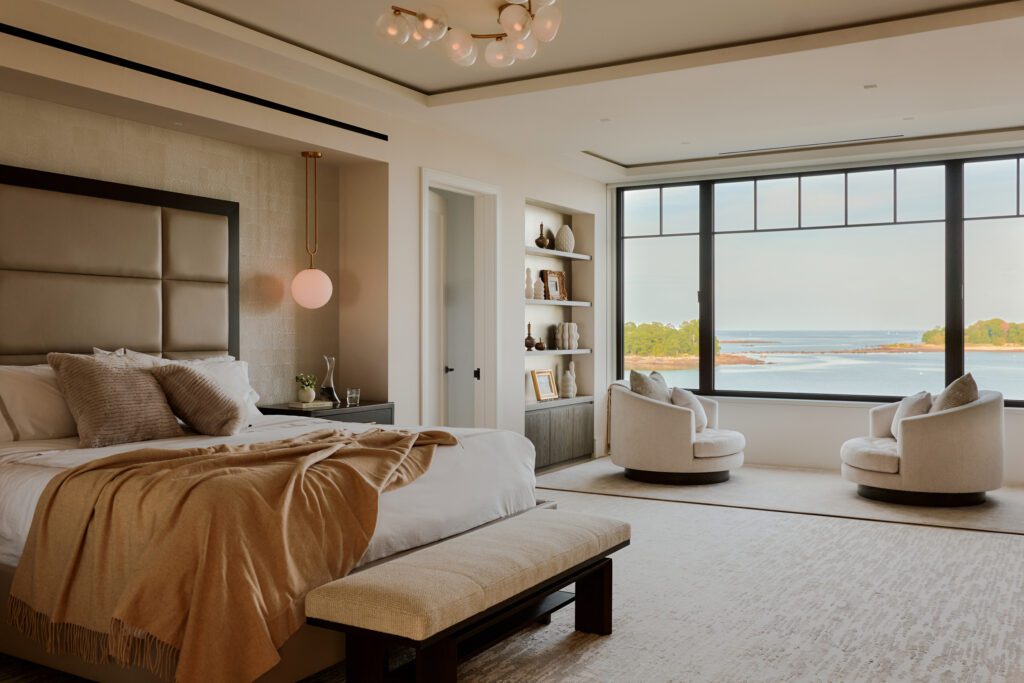
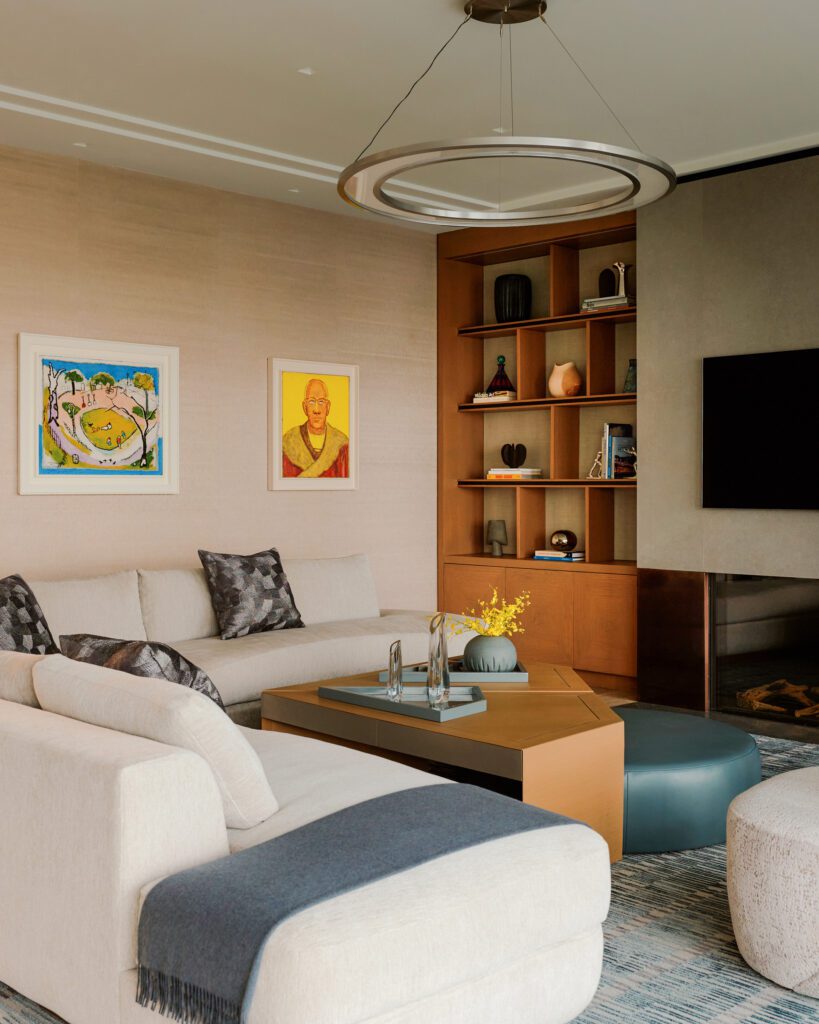
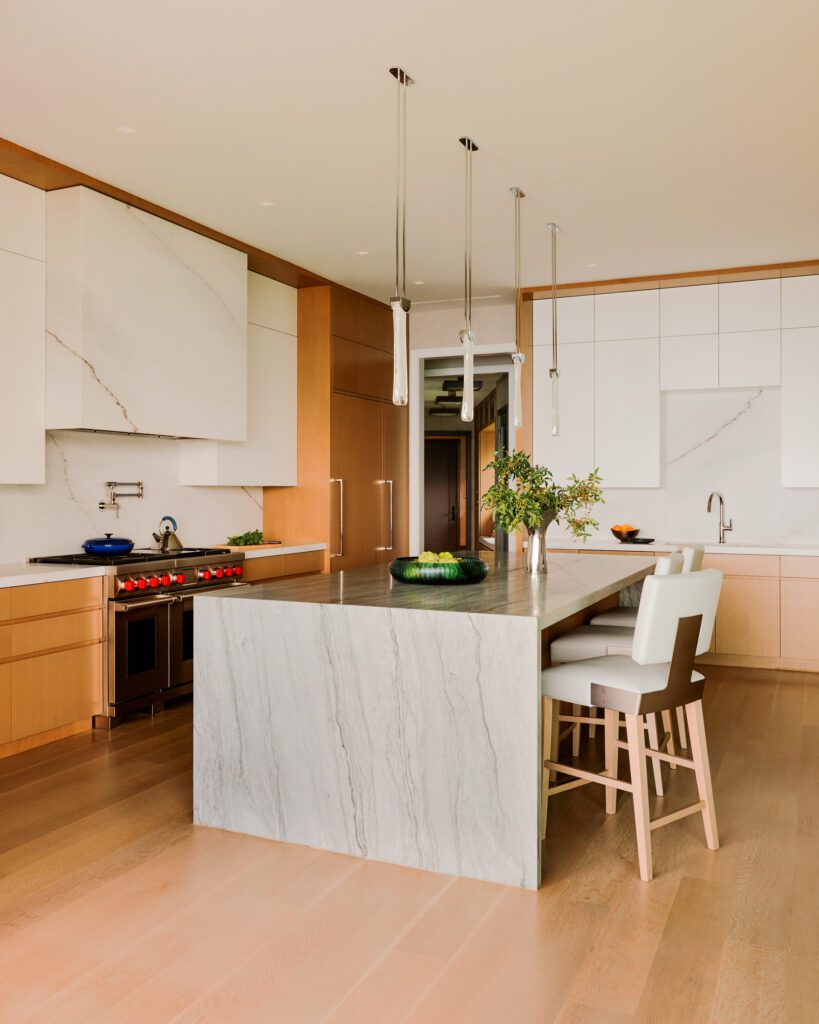
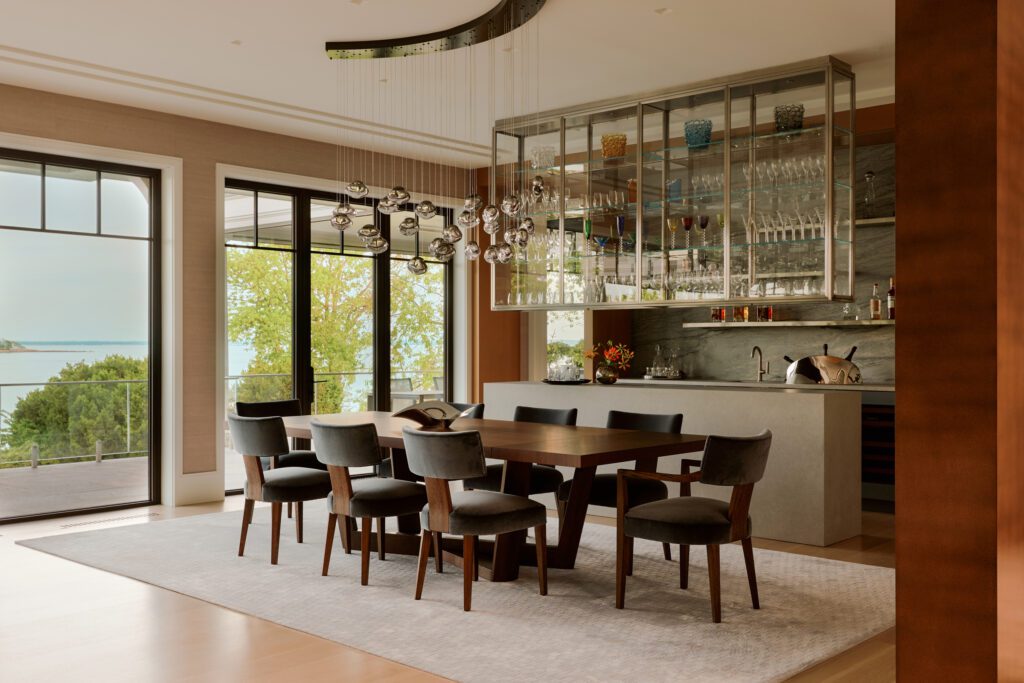
Interior materials echo the environment found outside. When the client wanted the kitchen to feel natural and warm, she used a combination of quartzite and marble for a calm and layered effect that reflects off the water. And at the lower level bar, striking blue veins flow from an Azul Macaubas marble quarried in Brazil.
Even her entry experience defers to the Long Island Sound surrounding it. “The moment you step inside, your eye is drawn to the water view, framed by the great room and butler’s pantry,” she says. “I didn’t want to obstruct that view, so your eye goes straight to the water.”
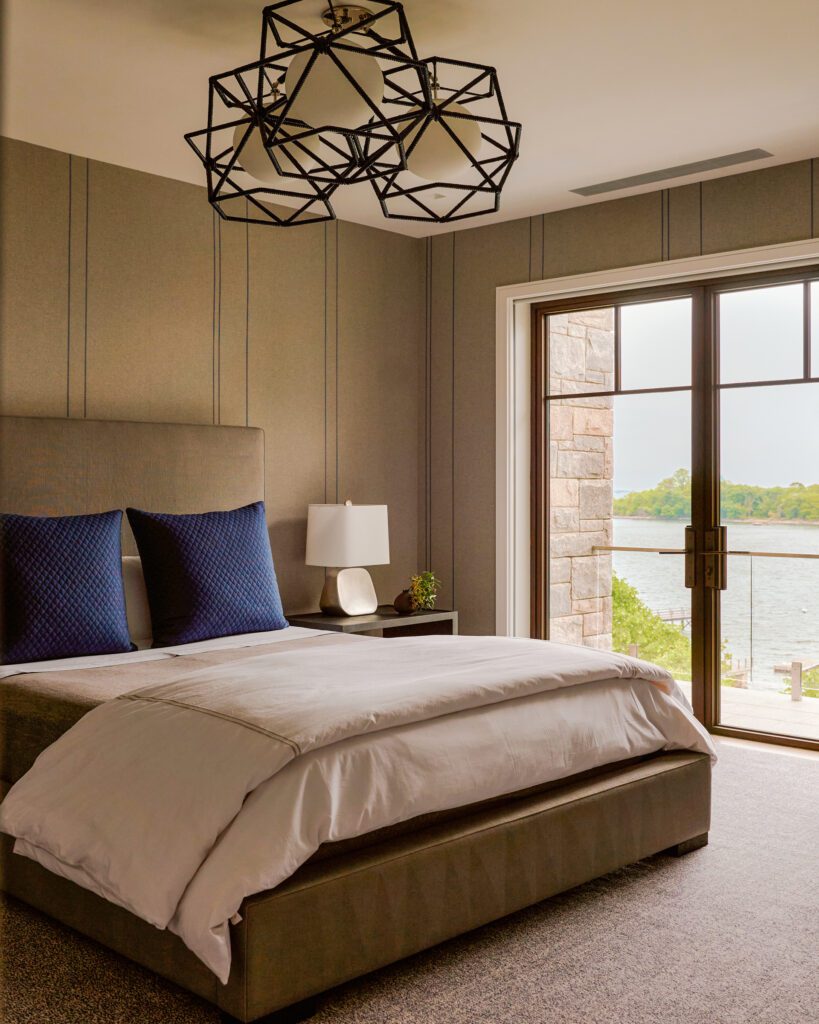
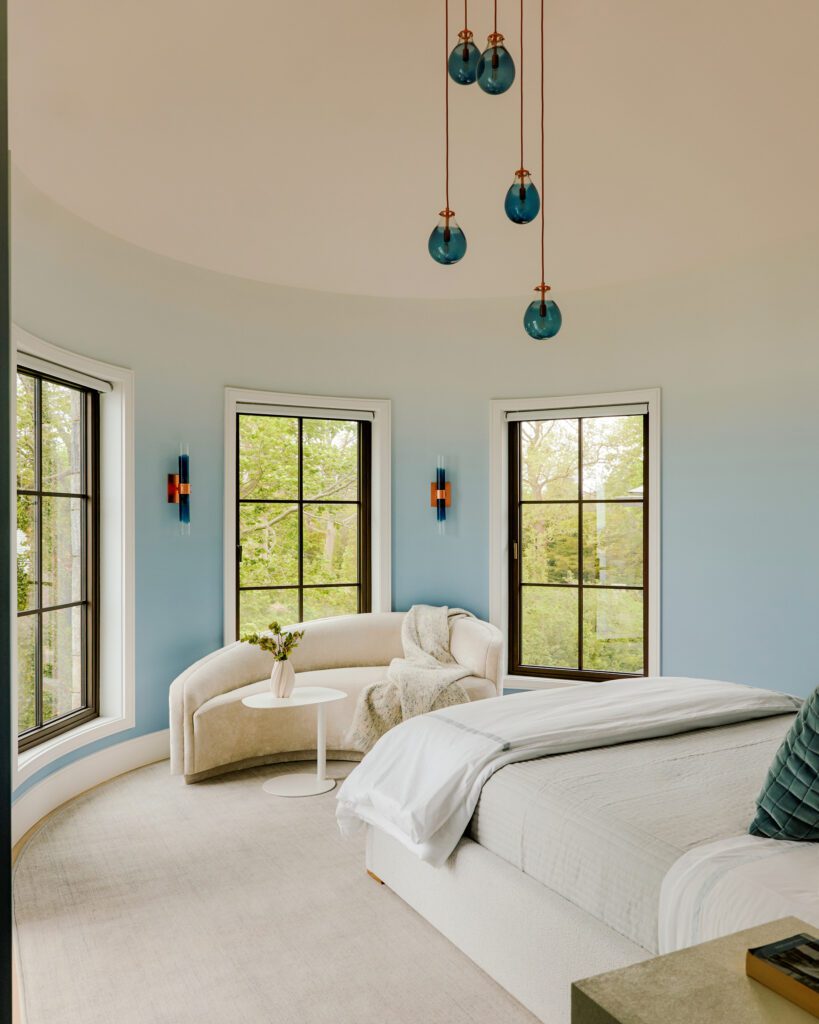
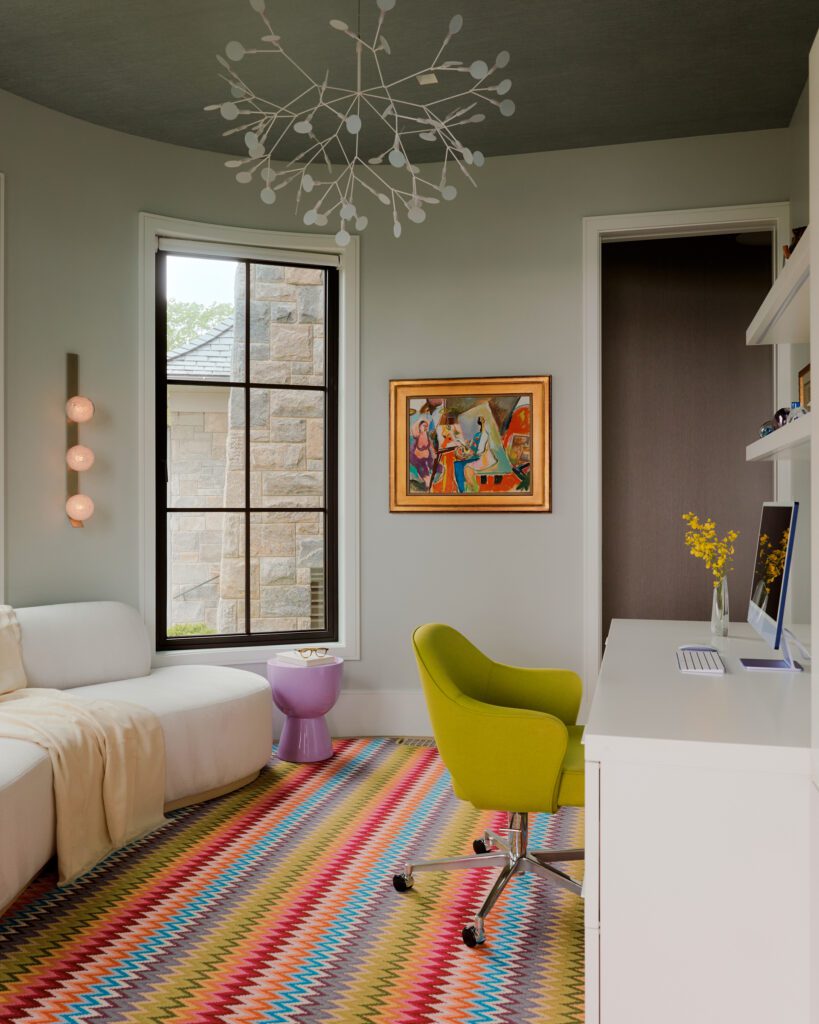
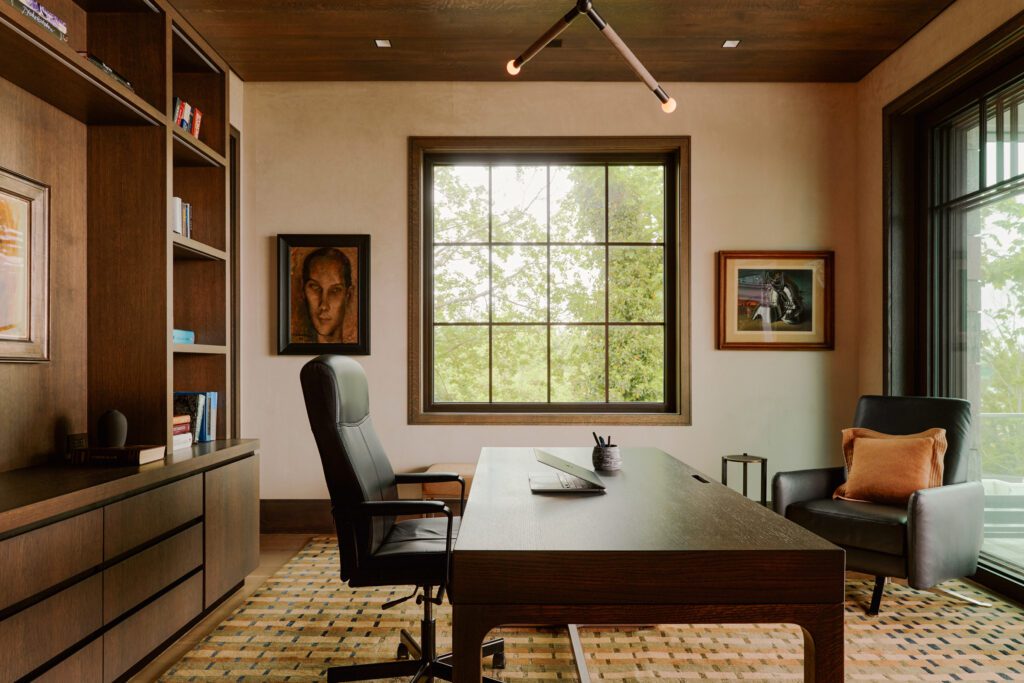
Beyond the interiors, Lagerloef’s role extended to nearly every aspect of the project, from floor plans to stone and tile, lighting, and millwork that unify the home’s design. “What made it special was the collaboration among the professionals involved,” she says.
“I felt fortunate to work with a team where the site, architecture, and the interiors ultimately spoke to each other in perfect harmony.” But Cardello sees the client as the big driver. “Everyone is different,” he says, “but if we can get them to think about the design process, we’ve got a successful team.” And with luck, they’ll have fun in the process.
FOR MORE INFORMATION, VISIT CARDELLOARCHITECTS.COM
The post Inside The Overlook: A Collaborative Waterfront Home in GreenwichFinding Fun in Functionality appeared first on Ocean Home magazine.